


-

- Пам’ятники військовим з алюмінію
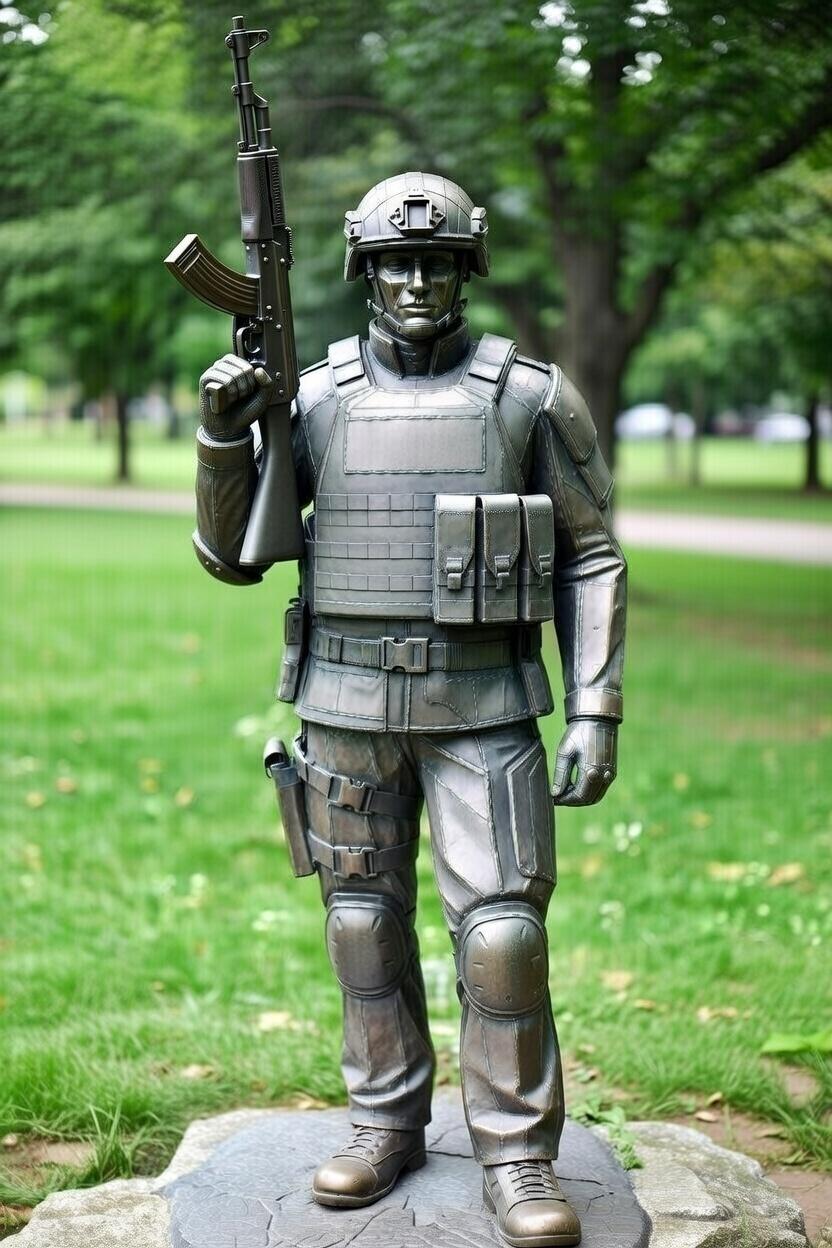
Aluminum Monuments for Military Personnel: Immortalizing the Deeds of Ukraine’s Defenders
Monuments dedicated to service members of the Armed Forces of Ukraine (AFU) serve as vital elements of national memory, preserving the history of our defenders’ heroic acts. These memorials embody courage, sacrifice, and deep patriotism. They are commonly placed in cemeteries, parks, public squares, or dedicated memorial complexes.
The tradition of honoring warriors has ancient roots in Ukraine, but since 2014—with the outbreak of conflict in eastern Ukraine, followed by the full-scale invasion—it has taken on renewed and profound significance. Such monuments pay tribute to participants in the Anti-Terrorist Operation (ATO) and Joint Forces Operation (JFO), as well as those who fell in the ongoing battles, serving as constant reminders of the true cost of freedom and independence.
РОЗРАХУНОК ВАРТОСТІ
Всього 7 кроків для отримання розрахунку
Aluminum has grown increasingly popular as a material for these military monuments due to its excellent properties. This metal enables the creation of both classical and strikingly modern designs that blend seamlessly into urban environments or memorial spaces. Common features include portraits of the fallen, national symbols such as the Ukrainian flag, the Tryzub (trident), or outlines of Ukraine’s map, along with powerful inscriptions like “Heroes Never Die” or “Glory to Ukraine.” Additional elements often feature crosses, angels, military insignia, or abstract shapes that evoke feelings of loss, pride, and resilience.
Advantages of Aluminum
Aluminum stands out for its exceptional resistance to harsh weather—rain, snow, wind, and intense sunlight—making it perfectly suited for outdoor memorials. It resists corrosion, retains its shape and color over many years, and requires minimal maintenance. Its light weight simplifies transportation and installation, while its malleability allows for intricate and creative designs, ranging from lifelike full-scale figures of soldiers to bold abstract compositions.
Compared to traditional materials like bronze or marble, aluminum offers greater affordability without compromising longevity. This makes it possible to produce meaningful monuments that not only honor memory but also help strengthen national identity in public spaces.
Manufacturing Process
Creating aluminum monuments demands precision and careful attention to detail to ensure every element carries deep emotional and symbolic weight. The process begins with design development, taking into account style, scale, symbolism, and the family’s individual wishes. Next, a model is produced—often using advanced 3D modeling—for clear visualization of the final piece.
The core step is aluminum casting: the metal is melted and poured into specialized molds to achieve high levels of detail and accuracy. Once cooled, the surface undergoes finishing—grinding, polishing, or applying protective coatings to enhance durability. The final stage involves on-site installation, where the monument is thoughtfully integrated into its surroundings. This method also allows aluminum to be combined with other materials, such as glass or stone, resulting in truly unique and harmonious compositions.
Design Variations and Examples
Aluminum military monuments come in diverse forms and purposes. Monumental sculptures feature large statues of soldiers incorporating AFU elements, often placed in parks or central squares. Gravestones typically include a portrait, cross, and patriotic motifs on the base. Park or interior figures suit museums and public areas, where abstract designs powerfully recall acts of heroism. Facade elements—such as bas-reliefs or ornamental details—adorn buildings within memorial complexes.
Numerous examples of such works can be found across Ukraine’s regions, standing as enduring tributes to bravery and sacrifice.
The company Gold Art Line operates nationwide, carrying out projects in major cities including Kyiv, Kharkiv, Odesa, Dnipro, Lviv, Zaporizhzhia, and Chernihiv. This broad reach ensures accessible production of high-quality monuments in every corner of the country, contributing to the preservation of national memory.
Aluminum monuments for military personnel do far more than preserve the memory of Ukraine’s defenders—they become integral parts of the cultural landscape, reminding future generations of the priceless value of freedom. By combining practicality with aesthetic excellence, this material enables the creation of enduring sculptures capable of withstanding the test of time and the elements. Ultimately, these memorials help shape our collective memory, paying eternal respect to those who gave their lives for Ukraine.


