


-

- Фасадні скульптури з чавуну
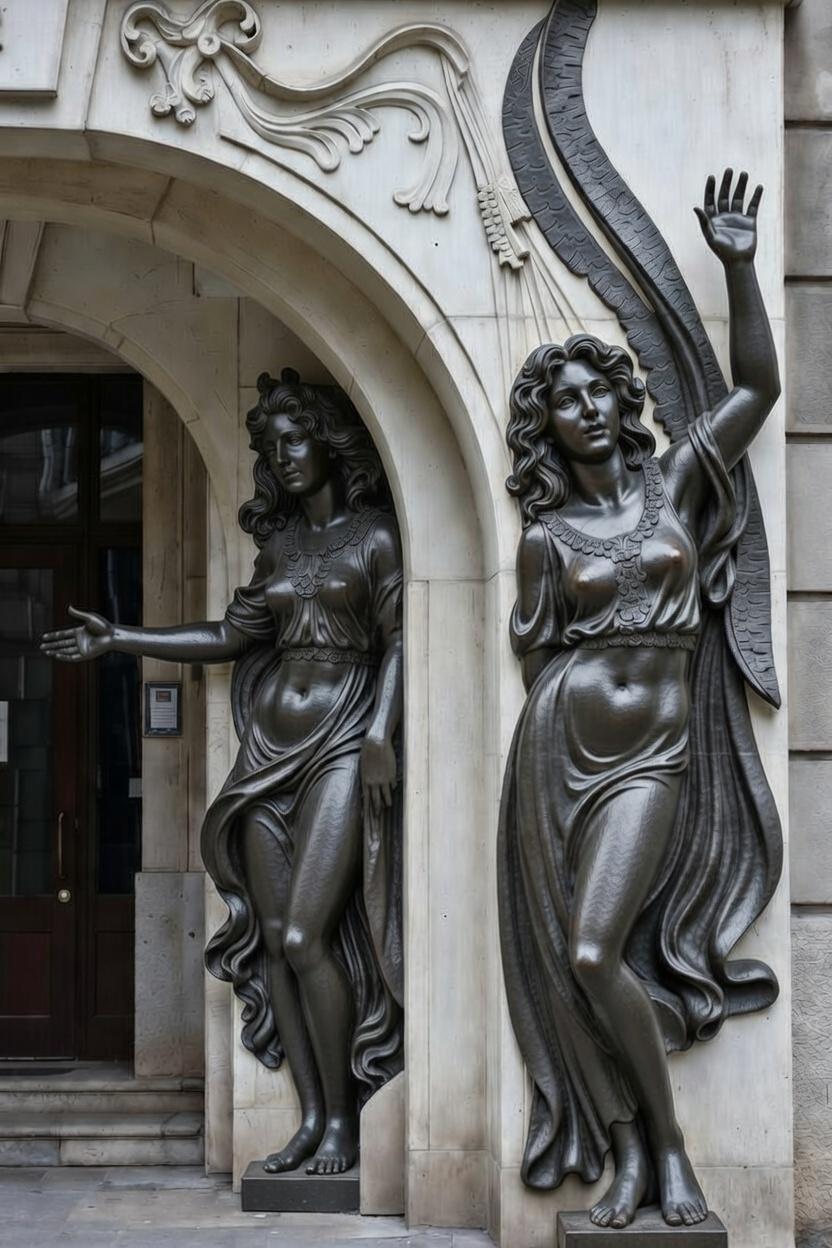
Cast Iron Facade Sculptures: Aesthetics, Durability, and Traditions in Modern Architecture
Cast iron facade sculptures represent a timeless element of architectural decoration, blending artistic expression with practical reliability. These pieces adorn the exterior walls of buildings, giving them a unique character, prestige, and harmony with their overall style. Cast iron sculptures look stunning on both historic landmarks and contemporary structures. In major Ukrainian cities like Kyiv, Lviv, Odesa, Kharkiv, Dnipro, and others, they have become an integral part of the urban landscape, enhancing architectural beauty while withstanding harsh weather conditions.
РОЗРАХУНОК ВАРТОСТІ
Всього 7 кроків для отримання розрахунку
The history of cast iron facade sculptures dates back to the 18th and 19th centuries, tied to the Industrial Revolution. Advances in foundry production made cast iron an affordable material that could be easily molded into any shape. In Europe and America, the first self-supporting cast iron facades emerged, featuring decorative elements like ornaments, reliefs, and sculptures. These were much cheaper than stone carvings but equally beautiful. In Ukraine, cast iron facade sculptures spread during the eras of the Russian Empire and Austro-Hungarian Empire. Many buildings from the 19th to early 20th centuries in central Kyiv, historic Lviv, seaside Odesa, and industrial Kharkiv are adorned with cast iron elements. These features have endured decades, wars, and changing times, showcasing remarkable longevity. Today, they are being restored to preserve the authentic appearance of Ukrainian cities.
The key advantages of cast iron facade sculptures make this material indispensable for exterior decor. First, its high mechanical strength allows it to withstand strong winds, physical loads, and temperature fluctuations from -30 to +40 °C. Second, exceptional durability means that, with proper protection, these sculptures can last 150–200 years or more without significant damage. Third, corrosion resistance is ensured by modern anti-corrosion coatings and patina, which reliably shield the surface from moisture and atmospheric effects. Fourth, the malleability of the casting process enables the reproduction of intricate details, such as leaves, flowers, facial features, and fabric folds. Finally, cost-effectiveness: cast iron facade sculptures are more affordable than bronze or natural stone, especially for large compositions. Their weight is balanced by secure mounting systems, and the material’s eco-friendliness (full recyclability) aligns with modern sustainable building standards.
The variety of cast iron facade sculptures is truly impressive. Among the most popular types are volumetric statues (like atlantes, caryatids, lions, eagles, or mythical creatures), installed on pediments, columns, and balconies. Bas-reliefs and panels with narrative compositions—drawing from historical, religious, or allegorical themes—decorate spaces between windows. Ornamental elements include mascarons, consoles, and capitals with floral patterns and geometric motifs. Modern designers craft stylized abstract forms that blend classic and contemporary styles. Such options allow sculptures to adapt to any architectural genre, from Baroque and Classicism to Eclecticism and Neoclassicism.
In Ukraine’s major cities, cast iron facade sculptures hold special significance. In Kyiv, cast iron details enhance buildings in Podil, Pechersk, and Andriivskyi Descent, complementing Baroque and Classical styles. Lviv abounds with elegant reliefs and ornaments on facades around Rynok Square and adjacent streets in Secession and Baroque aesthetics. Odesa is renowned for its luxurious cast iron elements on coastal buildings along Derybasivska Street and Primorsky Boulevard. In Kharkiv and Dnipro, cast iron sculptures are frequently used for restoring industrial and administrative structures, as well as in new developments. Cities like Zaporizhzhia and others incorporate these decorations to highlight historical heritage and add solidity to modern buildings.
The production process for cast iron facade sculptures is a complex blend of sculptural art and precise engineering. Initially, architects and sculptors develop sketches and 3D models, considering the facade’s dimensions, building style, wind loads, and lighting. Next, a physical model is created—traditionally from clay or wax, or via modern prototyping. Based on this, a casting mold is formed from refractory materials. Molten cast iron is poured at temperatures of 1200–1400 °C. After cooling, the piece is extracted, the gating system is removed, and it undergoes grinding, polishing, and final mechanical finishing. The concluding stage involves applying protective and decorative coatings: primers, anti-corrosion agents, patina, or specialized paints. Advanced CNC technologies ensure perfect accuracy and fidelity to the original design.
Current trends in using cast iron facade sculptures include both restoring historic sites and creating new ensembles. In many Ukrainian cities, efforts are underway to revive cast iron elements on architectural monuments, restoring their original look. For private cottages, villas, and public buildings, custom compositions are commissioned to emphasize the owner’s status and integrate seamlessly with the landscape. Gold Art Line specializes in crafting such items, leveraging cutting-edge technologies and skilled craftsmanship to produce high-quality cast iron facade sculptures tailored to any architectural vision.
Cast iron facade sculptures are more than just decor—they are an investment in enduring beauty and building reliability. They merge past traditions with present-day possibilities, making every structure unique. In Ukraine’s major cities, these sculptures continue to grace streets, preserve cultural heritage, and inspire new generations of architects and homeowners. Thanks to its strength, aesthetics, and versatility, cast iron remains a relevant material for facade decoration in the 21st century.


