


-

- Скульптура для інтер’єру з фібробетону
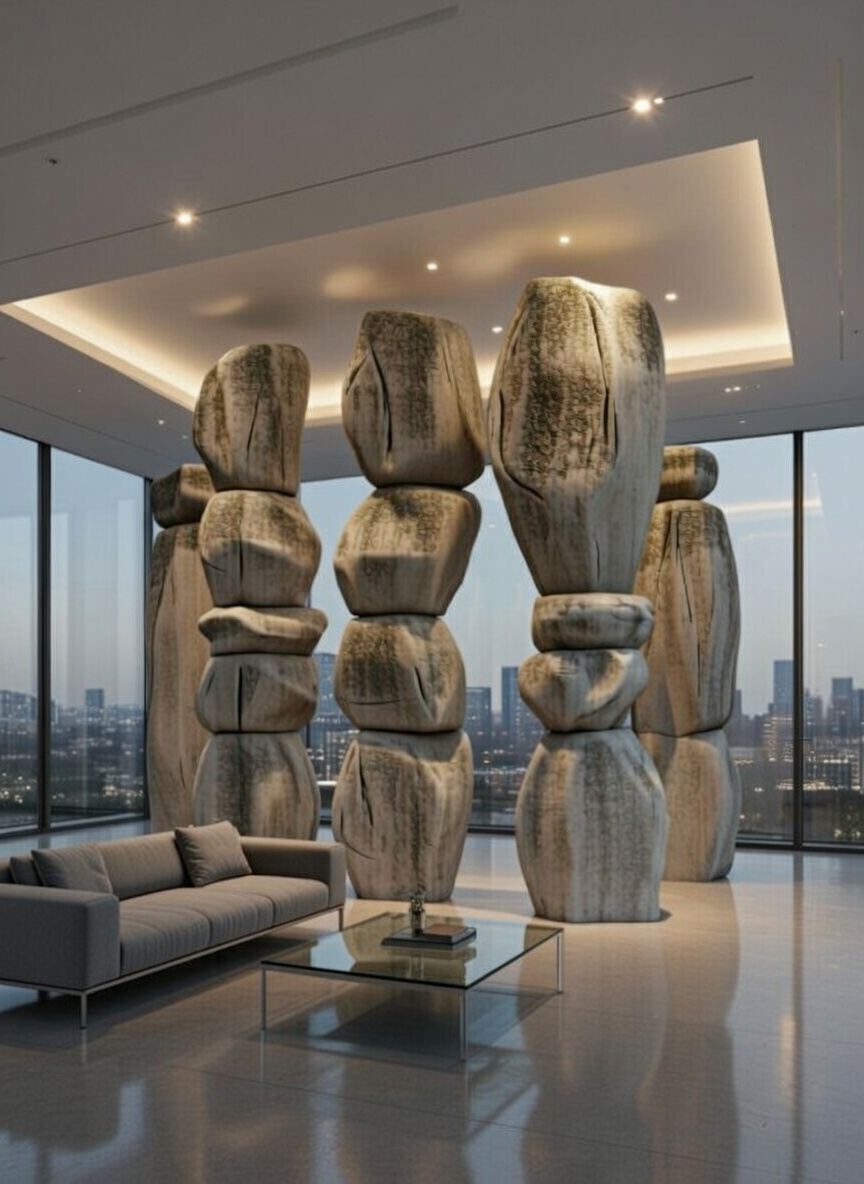
Interior Sculptures from Fiber Concrete
Fiber concrete (also known as fiber-reinforced concrete) is a modern composite material that blends traditional concrete with reinforcing fibers—glass, steel, or synthetic. It is widely used in architecture and interior design, especially for creating decorative sculptures. Unlike stone or metal, fiber concrete makes it possible to achieve complex, intricate shapes while offering excellent strength at a significantly lower weight. Companies such as Gold Art Line specialize in producing these lightweight yet durable elements that seamlessly integrate into both residential and public spaces.
РОЗРАХУНОК ВАРТОСТІ
Всього 7 кроків для отримання розрахунку
Key Advantages of Fiber Concrete for Interior Sculptures
One of the biggest benefits is outstanding crack resistance. The embedded fibers effectively prevent shrinkage cracks during drying, ensuring long-lasting durability. This is particularly valuable for indoor sculptures that must withstand temperature changes and humidity levels typical of living and working environments.
The material also delivers high tensile and flexural strength, allowing designers to create slender, highly detailed forms without fear of breakage. Being much lighter than traditional concrete or natural stone, fiber concrete simplifies transportation and installation. It can be easily painted, textured, or patinated to mimic stone, wood, or other natural finishes, giving designers virtually unlimited creative freedom.
In Ukrainian cities like Kyiv, Odesa, and Lviv—where contemporary design harmoniously blends with historic architecture—fiber concrete sculptures help craft elegant, balanced interiors for apartments, offices, and public venues. In fast-developing hubs such as Kharkiv and Dnipro, the material is especially popular for abstract and minimalist pieces that perfectly complement modern lofts and sleek interiors.
Manufacturing Process for Fiber Concrete Sculptures
The creation process starts with detailed modeling. Designers prepare sketches or precise 3D models that take into account the room’s dimensions and the sculpture’s intended function. The mixture—cement, sand, water, and fibers—is then prepared using either the premix method (all components blended together) or a spraying technique for perfectly even fiber distribution.
For larger or more complex pieces, additional reinforcement is incorporated to guarantee structural stability. The material is cast into molds and left to cure for several days. Final finishing includes grinding, painting, or applying patina to achieve the desired aesthetic. Simple sculptures can be completed in 2–3 weeks, while highly detailed works may take several months.
This technology enables the production of both abstract and figurative sculptures perfectly tailored to interior spaces.
Applications in Interior Design
Fiber concrete sculptures integrate beautifully into any setting. In homes, they serve as striking focal points—whether as abstract figures in living rooms or elegant decorative panels in bedrooms. In public interiors such as hotels and offices in Kyiv or Odesa, they are used for impressive wall reliefs and floor installations.
In Lviv, with its rich architectural heritage, the material allows designers to recreate historical motifs without the weight or cost of traditional stone. Similarly, in Dnipro and Kharkiv, fiber concrete pieces enhance modern lofts and minimalist offices, combining aesthetic sophistication with practical advantages.
Thanks to its unique combination of lightness, strength, and design versatility, fiber concrete is rapidly becoming the preferred choice for anyone seeking the perfect balance between functionality and artistic expression in their interior.


